Workshops
Emi offers a range of hands‑on textile workshops that share her deep knowledge of traditional and contemporary fibre practices. In 2026, she will be delivering a series of textile workshops at both The Oxfordshire Museum in Oxfordshire and Stanwick Lakes in Northamptonshire, introducing participants to sustainable materials, natural fibres, and Japanese craft traditions.
In addition to public programmes, Emi also offers private workshops for team training, groups, or individuals. These can be arranged as one‑off sessions at various locations or held in her own studio.
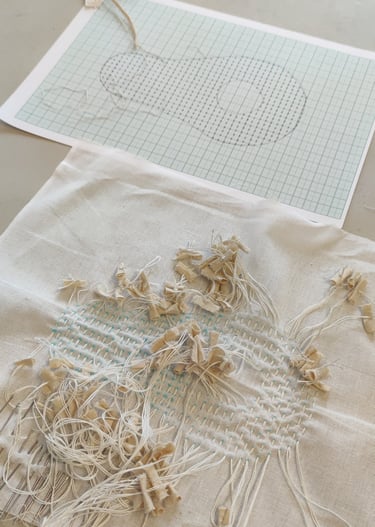
Shibori tie-dye workshop
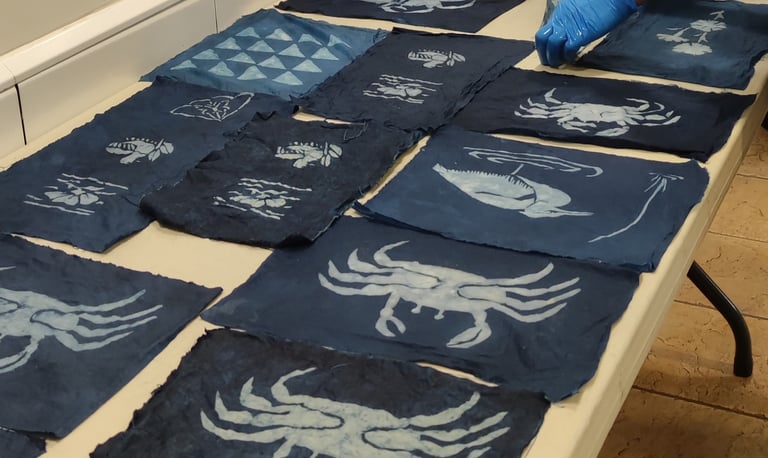
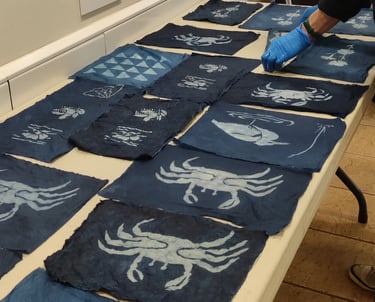
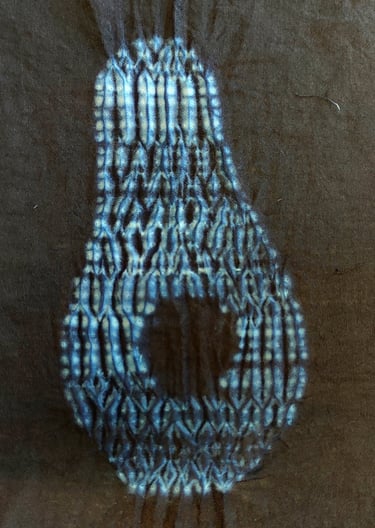
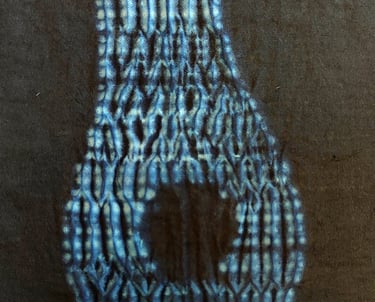
Shibori is a traditional Japanese tie‑dye technique that uses hand‑sewn resist stitching to create intricate patterns. In this workshop, participants will learn the essential foundations of stitched shibori — including how to begin and finish the stitching properly, a core skill required for all shibori techniques.
After learning the basics, each participant will create a small shibori piece based on their own design and chosen object. This workshop is designed as an introduction to the rich world of shibori, which includes more than 48 recognised techniques developed across Japan.
Emi is also planning seasonal shibori workshops in her studio, each focusing on a different traditional technique. For more information or to arrange a session, please contact her directly.
All images shown are works created by participants during Emi’s workshops.
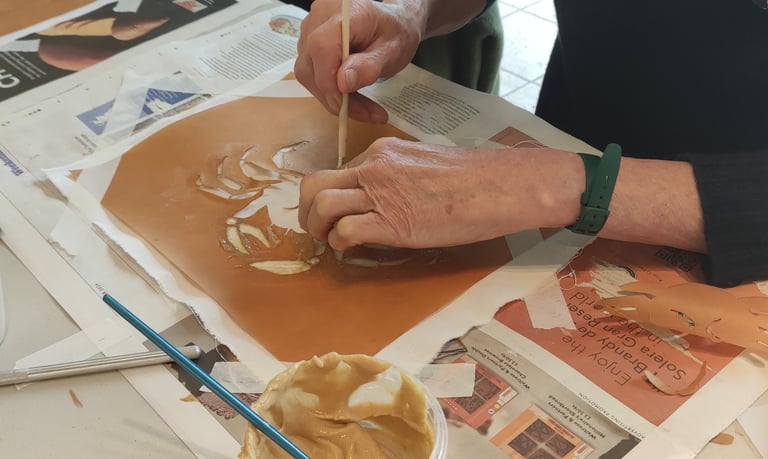
Katazome Workshop
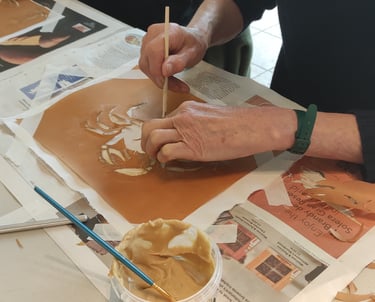
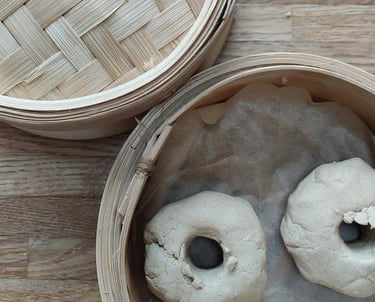
Katazome is a traditional Japanese resist‑dyeing technique that uses rice‑paste glue to create intricate stencil‑based patterns. In this workshop, participants will design and cut their own templates, then create a unique katazome print on a selection of natural fabrics.
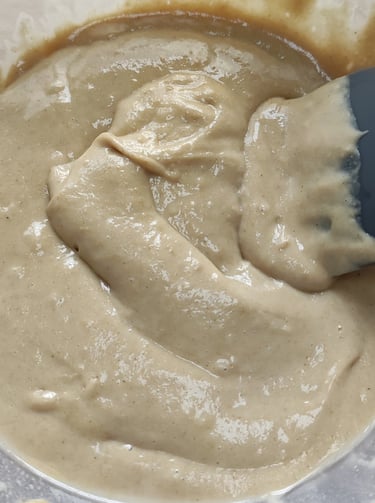
Using an indigo vat, each participant will explore how the rice‑paste resist interacts with the dye to produce beautiful, layered patterns. For those interested in going deeper, there is also an optional session on how to make the rice‑paste glue.
All images shown are works created by participants during Emi’s workshops.
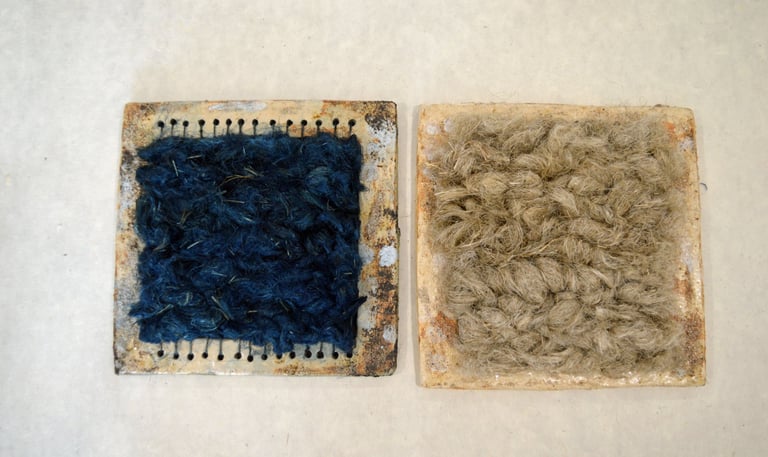
Flax weaving in the ceramic frame workshop
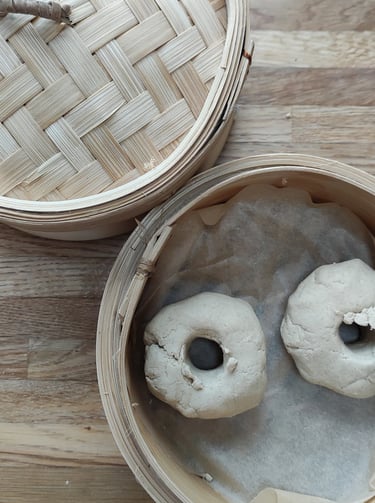
In this two‑day workshop, participants will create their own ceramic weaving frame and complete a small woven piece using natural fibres.
Day 1 – Making the Ceramic Frame Participants will design and hand‑build a frame using stoneware clay. After the session, Emi will fire and glaze each frame with her own glazes. The firing process usually takes one to two weeks, depending on kiln timing.
Day 2 – Weaving with Natural Fibres. Once the frames are fired, participants will:
set up the warp on their handmade frame
weave using a selection of natural fibres, including Emi’s home‑grown flax
Optional Add‑On Participants may also choose to learn how to process flax fibre into yarn, exploring the full journey from plant to thread.


Taste of Boro Workshop
Boro is a traditional Japanese technique of mending textiles by layering patches and stitching them together by hand. Today, boro pieces are admired around the world for their beauty, but they also carry a deeply emotional history. In the northern regions of Japan, winters were extremely cold, and families had very limited materials. They mended their clothing and futons out of necessity, adding layer upon layer simply to stay warm. It was not a choice — it was survival.
Emi hopes participants will learn not only the craft skills, but also the story behind boro: the hardship, resilience, and resourcefulness of the people who created these textiles. Many original boro pieces contain more than ten layers and were built up over many years of continuous mending.
This workshop is an ideal introduction to starting your own boro piece. Participants may bring their own textiles to mend, or they can begin using Emi’s collection of vintage fabrics as they start their journey into the world of boro.
Sashiko stitching is often used in boro work. As an optional part of the workshop, participants can learn a basic sashiko pattern to incorporate into their own boro piece.